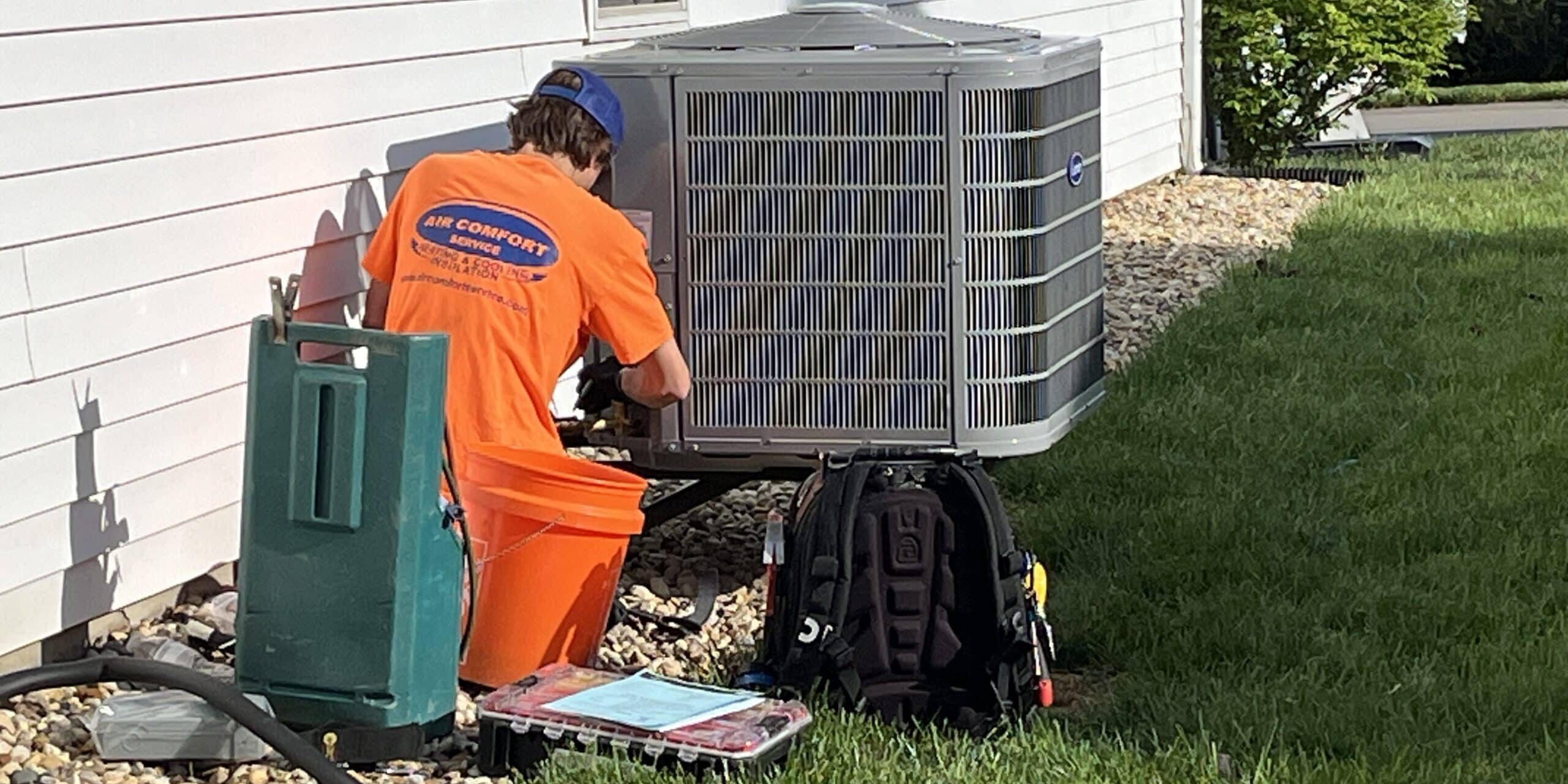
How Heat Pumps Work and How to Keep Yours Running All Summer
If you have a heat pump and you're not entirely sure what it actually does, you're not alone. Most homeowners know it heats and cools, but the questions start coming fast after that. Why does it ice up in winter? Why does it sound different than an AC? Do you really need to service it twice a year? Let's clear all of that up and make sure your heat pump is ready to handle whatever St. Louis throws at it.
What a Heat Pump Actually Does
A heat pump doesn't create heat it moves it. In summer, it pulls heat out of your home and pushes it outside, exactly like a central AC. In winter, it reverses and extracts heat from outdoor air to warm your home. Even cold air has usable heat energy in it, and modern heat pumps can work effectively down to around 0–5°F.
The reversing valve makes this work. It is a four-way valve that switches refrigerant flow direction between heating and cooling mode. It's one of the first things checked during a clean and check.
Why St. Louis Is Actually a Good Fit for Heat Pumps
St. Louis summers are hot and humid. Winters are cold, but not extreme. That's actually a sweet spot for heat pump technology.
Heat pumps are most efficient when temperatures stay above freezing, which describes most of a St. Louis winter. On the coldest nights, your backup heat source handles the gap. Newer cold-climate models maintain solid output down to 0°F, so St. Louis' occasional cold snaps are much less of a problem than they used to be.
How St. Louis Weather Stresses the System
- Summer: High heat and humidity mean the system is running hard for hours. Dirty coils, low refrigerant, and a weak start component all cause bigger problems under sustained load.
- Spring and fall: Every time the season shifts and your system switches between modes, the reversing valve is working. If it's sticking, you'll feel it most during these shoulder seasons.
- Winter: Steam or frost on the outdoor unit is expected. A unit that stays completely frozen and doesn't clear warrants a service call.
What Heat Pump Maintenance Actually Covers
Because your heat pump runs year-round in both modes, it needs maintenance twice a year, not once. A single annual system check on a heat pump is like changing your oil once every two years.
A complete system check from Air Comfort Service covers ten points:
- Coil cleaning
- Refrigerant level check and a full leak inspection
- Electrical connections - inspect, tighten, and test voltage
- Air filter inspection and replacement
- Thermostat calibration - verify accuracy in both modes
- Condensate drain flushed and flowing properly
- Blower motor and outdoor fan checked for wear and proper operation
- Reversing valve test confirmed working correctly in both heating and cooling mode
- Start Component and contactor check - high-wear components that fail without warning
- Defrost cycle verification checked during the heating-season visit
A lot of HVAC companies call a system check a "tune-up" without being specific. A coil that doesn't get cleaned, a capacitor that doesn't get tested are the things that fail on a 95-degree afternoon.
See the full breakdown on our heat pump maintenance page, plus what's included in the Preferred Partner Plan starting at $19/month.
Signs Your Heat Pump Needs Service Now
If you're seeing any of these, you need a service call:
- Not reaching set temperature - the system runs constantly without getting there
- Blowing warm air in cooling mode or cold air in heating mode
- Short cycling - turning on and off repeatedly without a full run
- Ice buildup on the outdoor unit that doesn't clear
- Unusual noises like grinding, squealing, banging, or rattling
- Tripping the circuit breaker more than once
- Energy bills climbing without any change in usage
If the system has stopped working entirely, Air Comfort Service offers 24/7 emergency heat pump repair with same-day service in most cases. Visit our emergency heat pump repair page or call (314) 819-0028 any time.
What Air Comfort Service Does for Heat Pump Owners in St. Louis
We've been servicing heat pump systems across the St. Louis metro for over 55 years. Our technicians are trained on both the heating and cooling sides of the system, which matters for a system that does both.
If we find something that needs attention, we'll explain what it is and what it costs before doing any work. Nothing proceeds without your approval.
For everything from routine seasonal maintenance to emergency repairs, visit our heat pump service page.